


Rail maintenance
“outside”
Rails wear out – which is completely normal. With passenger and freight trains constantly travelling on them, this damages the rail at the contact surface between the wheel and the rail.
To put off a complete replacement as long as possible, continuous rail treatment is recommended, with the result being that the rail’s condition is practically new. The decisive criteria here are to rectify defects and to restore the target profile at the rail head.
Rail with failiures
Milled rail
Finished rail
Rail failiures
The type of errors on rails may have different reasons and characteristics.
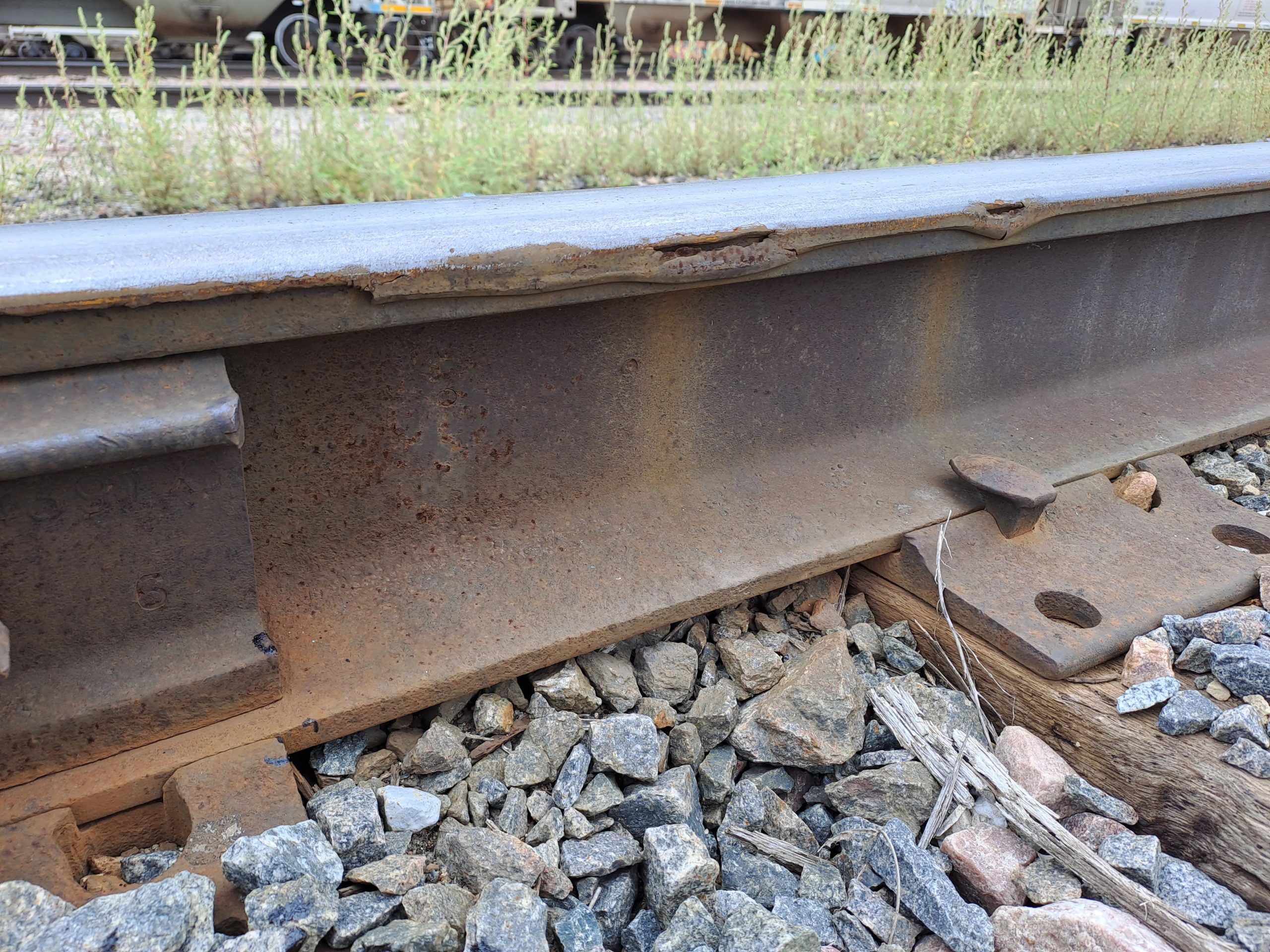
Transverse Profile Deformation
The rail experiences plastic deformation because it is travelled repeatedly. In the case of rollover burrs, for example, the material moves along the inner rail radius and protrudes towards the centre of the rail. This narrows the track gauge, leads to increased wheel wear, and results in uneven running.
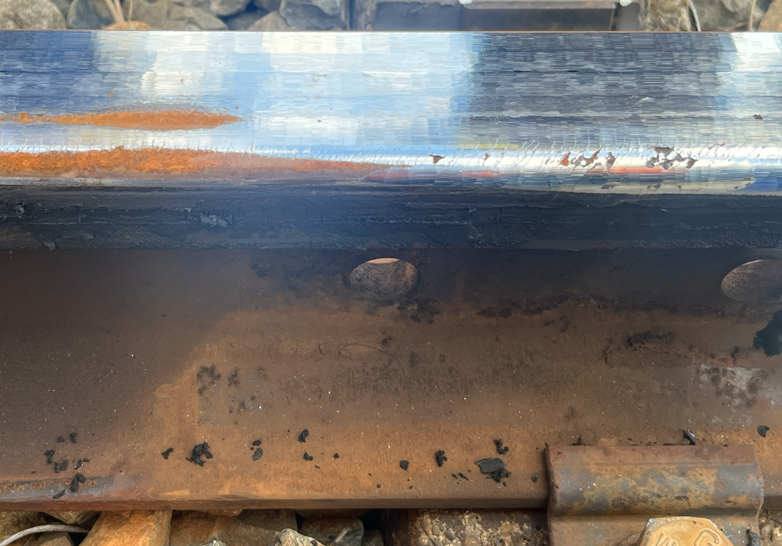
Headchecks
Small cracks that run into the rail head at an angle of 15° occur on the inner radius of the rail. They become problematic when the root cracks meet, which can lead to failures.
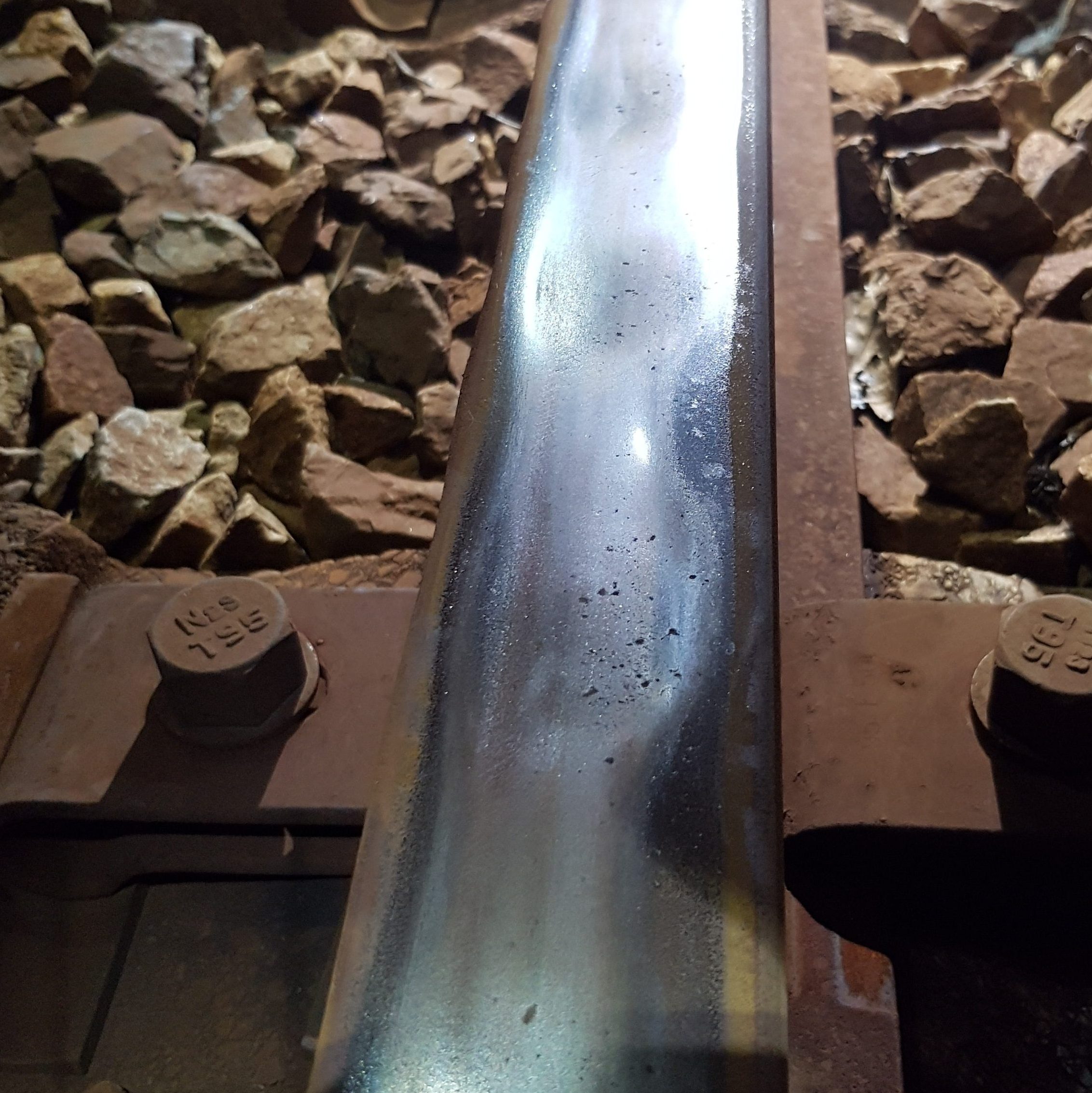
Corrugations/Short Pitch Corrugations
The difference in rotational speed between the wheel and the rail creates corrugations on the contact surface, mainly in curves. They cause vibrations and uneven running behaviour.
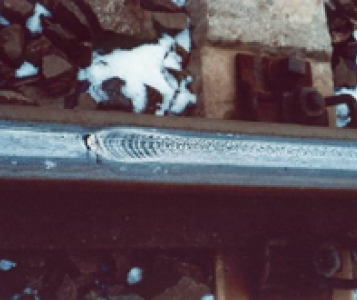
Wheel Burns
When starting up powered wheelsets, there is slip which causes abrasion on the rail, resulting in a wheel burn. These defect patterns also occur during emergency braking when the wheelset briefly blocks.
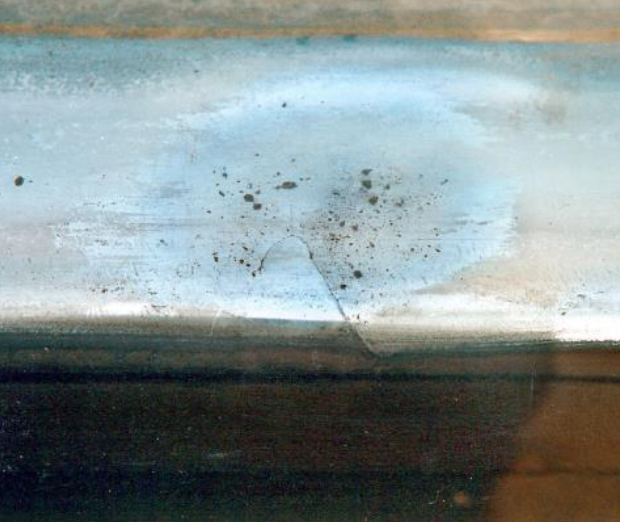
Squats/Belgrospis
The two terms are used to describe crack networks; in the case of squats, the cracks spread out in a V-shaped arrangement.
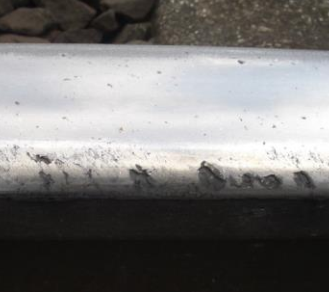
Flaking
If rail defects overlap or penetrate the rail deeply enough, the inner edge of the rail will flake.
From our point of view, the only worthwhile and effective way to treat rails is to use a milling machine. For this reason, we’d like to try to explain why milling is the method of choice for rail network owners worldwide.
FAQ Rail maintenance
Yes, definitely. What initially begins as an optical defect can cause a massive rail failure and thus lead to a derailment. Derailments can not only cause extensive damage to property, but also injure people.
The best example of this is a train accident in England in 2000: a 35-metre long section of rail broke into over 200 pieces. The cause was most likely head checks.
Compared to simply grinding the rail, milling has the advantage that an exact target profile is produced by machining. The removal rate is also significantly higher. The milling process is more effective at eliminating defects that protrude deep into the rail, as fewer passes are required.
Milling the rail at regular intervals with a lower amount of removal is recommended. The result is the desired rail profile across the entire rail network, which enables optimum wheel/rail pairing and thus reduces wear. The length of intervals depends on the capacity utilization of the rail network, i.e. the amount of travel on the rails until a defect occurs.